Tankless Review
Takagi T-H3S-OS-N Condensing Outdoor Tankless Review
Researched from the DOE test procedures, NFPA 54 and NEC code tables, and manufacturer specifications. Updated .
Quick answer
Most of the units in this review series force a choice: condense for efficiency and accept indoor mounting with a PVC vent, or mount outdoors and give up the condensing efficiency gain. The Takagi T-H3S-OS-N is built to avoid that tradeoff, condensing while mounted outside.
Its Amazon title states "8-Gallon Per Minute" the same way other listings in this category state a headline GPM, with no rise named. This review covers what that means, what is and is not published on the specification side, and the one detail buyers overlook: a condensing unit still produces condensate even when it lives outdoors.
What the specifications actually say
Takagi's listing states natural gas fuel, condensing operation and outdoor mounting directly. The listing title also states "8-Gallon Per Minute," which we treat as a stated maximum flow figure from the manufacturer's own title, not a number this review calculated. What the listing does not state, in the fields we draw from, is a BTU input, a temperature rise for that 8 GPM figure, a UEF, dimensions or weight.
| Specification | Status | Where to find it instead |
|---|---|---|
| Fuel type | Published: natural gas | Amazon listing |
| Condensing operation | Published: yes | Amazon listing |
| Mounting | Published: outdoor | Amazon listing |
| Stated maximum flow | Published: 8 GPM, no rise stated | Amazon listing title |
| BTU input | Not published in this listing | Takagi installation manual / spec sheet |
Convention Source: Fields pulled directly from the Amazon listing and listing title for this model, current as of research.. Without a published BTU input, we cannot compute a flow-versus-rise table the way we can for units that state one. Takagi's own installation manual publishes the flow curve; see the <a href="/reference/tankless-gpm-temperature-rise-chart">temperature rise reference</a> for how to read it.
Who this unit suits
This unit suits a household that specifically wants both things a typical listing forces you to choose between: no flue to route, and condensing efficiency. That combination fits a warm climate property (outdoor mounting is generally not advisable in a hard freeze climate) where the owner still wants the operating efficiency and lower gas usage of a condensing unit rather than settling for the non-condensing outdoor alternative.
It also suits a retrofit where an exterior wall has easy access to gas, water and a suitable condensate drain path, since eliminating the flue does not eliminate the need to route condensate somewhere.
Who should not buy it
Anywhere winter brings a hard, sustained freeze is a poor fit for any outdoor tankless heater, condensing or not, because freeze protection depends on continuous power and an outage during a freeze is exactly when protection is needed most. A property in that climate is better served by an indoor unit inside the building envelope; see our cold climate picks.
Anyone who wants to size a purchase against a published BTU input and rise curve before buying should also be cautious, since this listing states a flow figure but not the input or rise behind it. Confirming the actual specification sheet from Takagi before ordering, especially for a gas line sizing decision, is worth the extra step.
What the installation actually involves
Mounting outdoors removes the flue run entirely, the same installation saving as any other outdoor unit. What an outdoor condensing unit does not remove is condensate: the unit still produces it, and it still needs to drain to a neutralizer rather than directly onto the ground or into a storm drain, which is easy to miss when there is no indoor flue or condensate line to plan around. Gas line sizing should be confirmed against Takagi's actual BTU input figure from the manufacturer, then checked against the gas line size calculator and NFPA 54 / IFGC capacity tables rather than assumed from the listing's flow number alone.
Gas and electrical connections belong to a licensed plumber or electrician. Installation labor cost estimating is covered at houseprojectcalc.com.
How we researched this
We did not install this unit outdoors or measure its condensing performance in that mounting configuration. This review is compiled from Takagi's published Amazon listing, including its title's stated flow figure, and the consensus of verified owner reviews on that listing, plus general knowledge of how condensing heat exchangers and outdoor mounting each work independently. Where the listing does not publish a figure, that is stated directly rather than estimated.
Alternatives and what an outdoor condensing unit needs
If the condensing-plus-outdoor combination is not required, the alternatives below simplify the installation in one direction or the other. Both accessories below are still needed regardless.
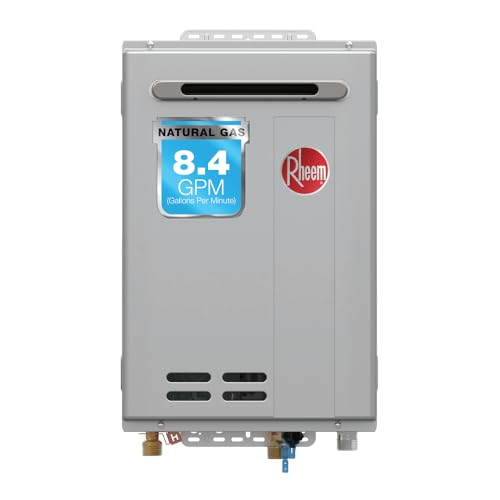
Rheem RTG 8.4 GPM Natural Gas Outdoor
$964.10A non-condensing outdoor unit at a lower price, for a warm climate where the condensing efficiency gain does not offset the added cost and condensate handling.
Best for: Warm climate retrofits where running a vent is the problem
Check price on Amazon
Rinnai RX160iN Condensing
$1,442.70A condensing indoor unit, for a property where routing a short PVC flue is easier than running a gas and water line to an exterior wall.
Best for: Three bathroom houses in a cold inlet region
Check price on Amazon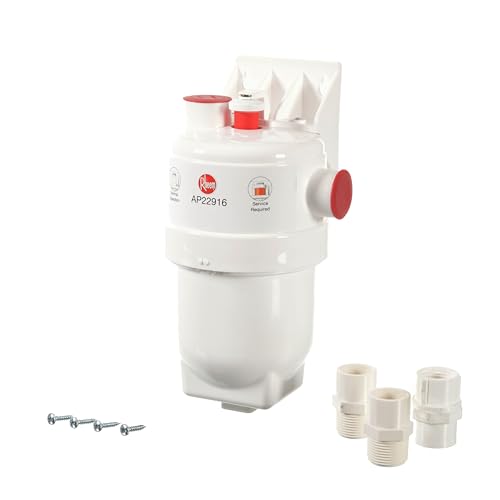
Rheem Axiom External Neutralizer RTG20329AR
$149.85Even mounted outdoors, a condensing unit still produces acidic condensate that needs neutralizing before it drains, an easy detail to overlook on an outdoor install.
Best for: A Rheem condensing tankless that must pass inspection
Check price on Amazon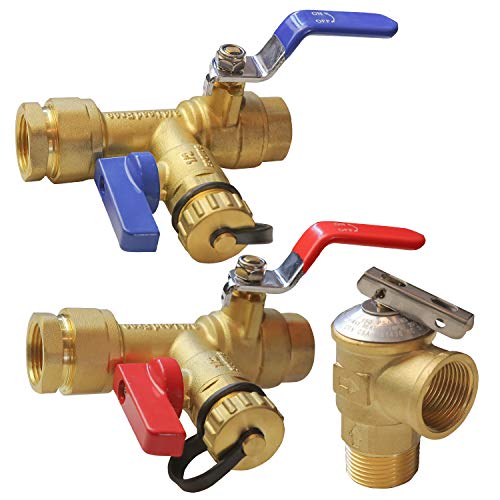
Hourleey 3/4 in IPS Isolator Valve Kit
$49.99Isolation valves at the unit are what make an annual descale possible without disturbing the gas and water supply lines.
Best for: Retrofitting valves to an existing unit
Check price on AmazonFrequently asked questions
- Does the Takagi T-H3S-OS-N actually deliver 8 GPM?
- The listing title states 8 GPM as a maximum flow figure without naming the temperature rise it was measured at, which means it is not a number to plan a household's fixture count against directly. The manufacturer's installation manual publishes the actual flow-versus-rise curve needed for real sizing.
- Can a condensing tankless heater be mounted outdoors?
- Yes, and the Takagi T-H3S-OS-N is built specifically for that combination. Most condensing units are designed for indoor mounting with a PVC vent to the outside, so an outdoor-rated condensing unit is a less common pairing on the market.
- Does an outdoor condensing tankless heater still need a condensate neutralizer?
- Yes. Mounting outdoors removes the need for a flue, but it does not stop the unit from producing condensate. That condensate still runs mildly acidic and still needs to reach a neutralizer before it drains, a detail that is easy to overlook without an indoor condensate line to plan around.
- What BTU input does the Takagi T-H3S-OS-N have?
- The Amazon listing for this model does not publish a BTU input figure in the fields available here, only the stated maximum flow of 8 GPM. Confirming the actual input rating from Takagi's specification sheet is the right step before sizing a gas line.
- Is an outdoor tankless heater safe in a cold climate?
- Outdoor tankless heaters, condensing or not, rely on continuously powered freeze protection elements. A winter power outage during a hard freeze can damage the unit's internal plumbing, which makes an outdoor unit a poor fit for any climate with sustained sub-freezing temperatures.
- How is the Takagi T-H3S-OS-N different from a non-condensing outdoor unit?
- A non-condensing outdoor unit, like the Rheem RTG-84, produces no condensate and needs no neutralizer, which simplifies the outdoor installation. The Takagi trades that simplicity for higher operating efficiency, at the cost of still needing a condensate drain path even without a flue.
Safety note: never route condensate onto the ground or into a storm drain without a neutralizer, and never disable an outdoor unit's freeze protection to save power during an outage.