Skip to content
WaterHeaterCalc

Tankless calculator

Tankless Water Heater Sizing Calculator

Quick answer

A tankless unit is sized by flow AND temperature rise together. Two showers at 2 gallons per minute each, with a 50 F inlet and a 120 F outlet, need 4 gallons per minute at a 70 F rise, which takes about 205,000 BTU of gas input or 58 kilowatts of electric.

Your numbers

Results update as you type. Nothing you enter leaves your browser.

Result

Required flow 5.50 GPM Published standard
Temperature rise 70 F Published standard
Gas input needed 235,000 BTU/h Published standard
Electric power needed 57.5 kW Published standard

That gas input is above 199,000 BTU, which is the largest residential tankless input commonly sold. Reduce the simultaneous fixtures, fit lower flow shower heads, or plan for two units in series. Note also that the kilowatt figure at this flow is far beyond what a residential electrical service supplies.

The formula

Required GPM = sum of simultaneous fixture flows. Gas input = GPM x rise x 8.33 x 60 / efficiency. Electric kW = GPM x rise x 8.33 x 60 / 3412.

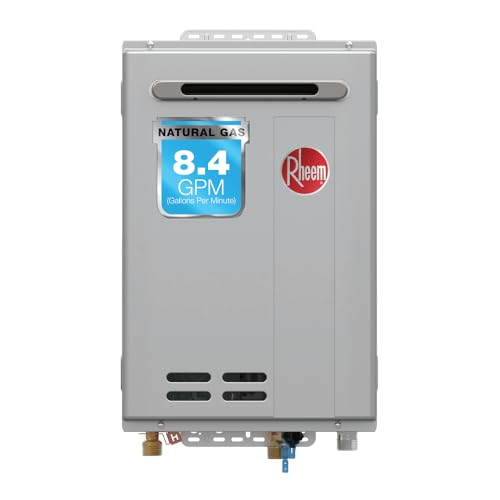
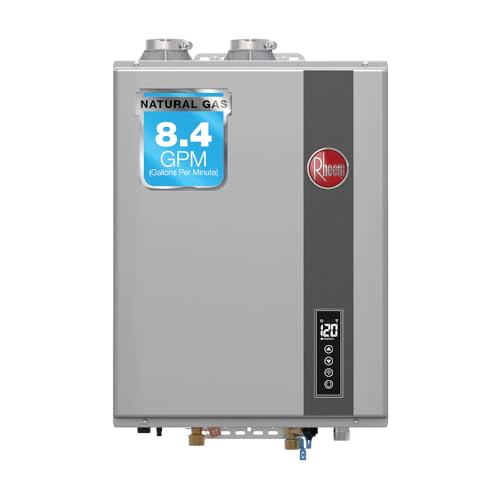
The temperature rise is in the numerator, which is why the same unit that makes 8.4 gallons per minute in Florida makes roughly half that in Minnesota. A manufacturer headline GPM figure with no rise attached tells you nothing. Always read the manufacturer flow curve at YOUR rise.

The figures above are computed with these exact inputs: Showers running at once 2, Flow per shower 2 GPM, Sinks running at once 1, Flow per sink 1.5 GPM, Inlet water temperature 50 F, Outlet temperature 120 F, Gas thermal efficiency 82 %.

What this calculator assumes

Some of these are published test procedures or code tables and some are planning conventions. They are not the same kind of number, so each one is labeled.

AssumptionKindWhere it comes from
Water Weight: 8.33Published standardPublished density of water at 60 F, 8.33 lb per gallon
Tankless Efficiency: 0.82ConventionAssumed thermal efficiency for a non-condensing gas tankless. Condensing units publish figures above 0.90
Electric Efficiency: 0.98ConventionAssumed conversion efficiency for a resistance element at the point of heating

Gear that matches this result

Every card below is in the page source. The calculator re-ranks them against your numbers and marks anything that falls short of what you just calculated.

Frequently asked questions

What size tankless water heater do I need for a whole house?
It depends on your inlet temperature as much as your fixtures. Two simultaneous showers at 2 gallons per minute need 4 gallons per minute, which at a 40 F rise takes roughly 120,000 BTU and at an 80 F rise takes roughly 240,000 BTU. The same house needs a very different unit in Texas and in Minnesota, which is why a single GPM number on a box is not a size.
Why does the advertised GPM never match what I get?
Because the advertised figure is measured at a small temperature rise, often 35 F, which almost nobody actually has. Flow and rise trade against each other directly: at double the rise a unit makes half the flow. Manufacturers publish a flow curve against rise in the installation manual, and that curve is the honest specification rather than the headline number.
Can an electric tankless heater run a whole house?
In a warm inlet climate, sometimes. In a cold one, almost never at a sensible electrical cost. Four gallons per minute at a 70 F rise takes about 58 kilowatts, which is 240 amps of continuous load and more than most houses have in total service. Electric tankless units make far more sense at a single fixture than for a whole house.
Should I size for every fixture in the house?
No. Size for the fixtures that genuinely run at the same time, which in most households is two showers or one shower plus a sink. Sizing for every fixture at once buys an enormous unit, an enormous gas line and an enormous bill for a scenario that never happens. Count the realistic worst morning instead.

Researched guidance, not professional advice. These results are planning figures from published test procedures, code tables and manufacturer specifications, and they do not replace a sizing done by the person who will sign the permit. A water heater is a pressure vessel: never cap, plug or remove the temperature and pressure relief valve, and replace one that will not open when the test lever is lifted. Gas line, flue and vent work belongs to a licensed plumber or gas fitter, because improper venting produces carbon monoxide. Water at 140 F scalds a child in seconds. Turn off the breaker before touching an element, and never energise an element that is not submerged.