Tankless
Best Outdoor Tankless Water Heaters
Researched from the DOE test procedures, NFPA 54 and NEC code tables, and manufacturer specifications. Updated .
Quick answer
An outdoor tankless water heater mounts on an exterior wall and draws combustion air from, and vents exhaust directly to, the outside atmosphere a few inches away, rather than through pipe routed inside the structure. That single design choice eliminates an entire category of install work: no vent pipe run through walls, attics or roofs, no roof or wall penetration for a flue terminal, and no interior clearance planning around the vent path.
For a retrofit especially, where routing new vent pipe through finished walls or a tight mechanical closet is often the most expensive and disruptive part of a tankless conversion, going outdoor can be the difference between a straightforward swap and a multi-day project. The tradeoff is that the unit and its water connections now live outside, exposed to weather the indoor version never sees, and freezing is the real risk that saving carries.
What does mounting outdoor actually save on an install?
The vent pipe run, the roof or wall penetration for the flue terminal, and the interior clearance and combustion air planning around it. On an indoor unit, especially a retrofit into a home with no existing suitable flue chase, running new vent pipe through finished walls, an attic or a roof is frequently the single most labor-intensive and disruptive part of the entire tankless conversion. An outdoor unit skips all of it: combustion air and exhaust both happen a few inches from the unit's own housing.
That is a real, structural saving, not a marketing claim, because it removes an entire scope of work rather than making the same work cheaper. It does not eliminate the gas line sizing question or the water piping, which remain identical to an indoor install of the same capacity.
What is the actual freeze risk with an outdoor unit?
An outdoor tankless unit and the water lines connecting to it are exposed to ambient outdoor temperature, unlike an indoor unit protected by the building envelope. Manufacturers build in freeze protection, typically small electric heating elements at vulnerable points that activate automatically below a threshold temperature, but that protection requires the unit to have continuous power. A power outage during a hard freeze removes that protection at exactly the moment it is needed most.
This is the honest counterweight to the install saving: an outdoor unit in a genuinely cold climate carries a real risk a well-protected indoor unit does not, particularly around power reliability during winter storms. Buyers in mild or moderate climates get the install saving with comparatively little downside; buyers in the coldest climates should weigh that risk seriously against the saving, and consider a backup power plan for the freeze protection circuit specifically.
How we chose these picks
These picks were compiled from manufacturer published specifications, installation manuals and the consensus of verified owner reviews. We did not install, test or run any of these units ourselves, and freeze-protection claims cited here are the manufacturer's own stated design feature, not a cold-weather test we performed.
Buying tips for an outdoor tankless install
- In a cold climate, confirm the unit's published freeze-protection threshold and whether it needs a dedicated circuit that stays powered during an outage.
- Outdoor mounting still needs a properly sized gas line; nothing about outdoor placement changes that requirement.
- Consider a wind-resistant or recessed mounting location; manufacturers publish clearance requirements from doors, windows and grade.
- If cold-climate performance is your main concern rather than install simplicity, also read the cold climate tankless picks, which weigh temperature rise capacity specifically.
Outdoor gas connections and venting clearances still require a licensed plumber or gas fitter. "No interior venting" does not mean "no code requirements"; exterior placement has its own clearance rules around doors, windows and grade.
The picks, by tier
Both natural gas and propane outdoor units appear here since the outdoor mounting question is the same regardless of fuel; see the propane-specific page if fuel type is your primary concern.

Rheem RTG 7.0 GPM Natural Gas Indoor
$653.77Included for contrast: this is the indoor version of a comparable-size unit, useful for confirming what an outdoor equivalent saves versus routing an interior vent.
Best for: A one or two bathroom house in a warm inlet climate
Check price on Amazon
Rheem RTG 7.0 GPM Propane Outdoor
$770.17An outdoor propane unit sized for a small house or cabin, skipping interior venting for a simpler off-grid or rural install.
Best for: Propane properties with no natural gas service
Check price on Amazon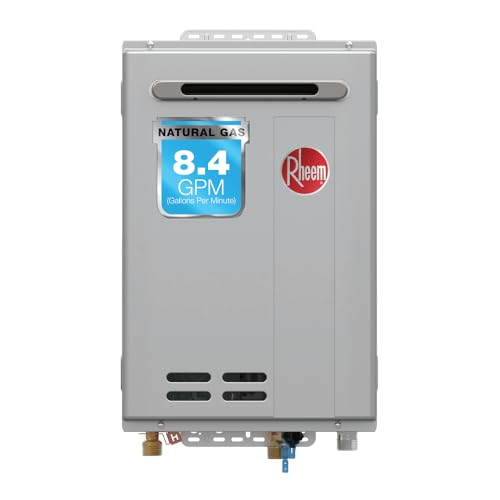
Rheem RTG 8.4 GPM Natural Gas Outdoor
$964.10The buy-once whole-house outdoor pick, with enough published flow for two to three fixtures and no interior vent run to plan.
Best for: Warm climate retrofits where running a vent is the problem
Check price on Amazon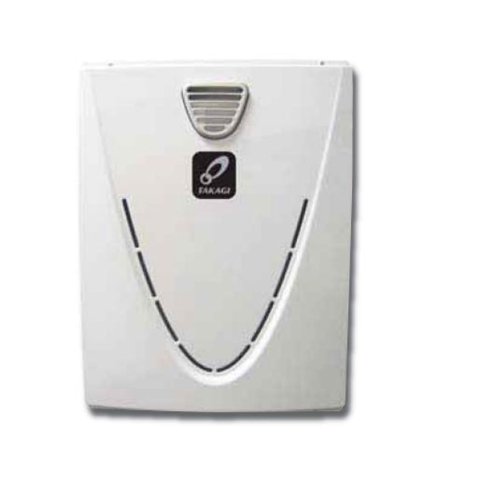
Takagi T-H3S-OS-N Condensing Outdoor
$1,355.95A high-capacity outdoor condensing unit for a large house wanting outdoor mounting at the top of the flow range.
Best for: Warm climates that still want a high efficiency unit
Check price on AmazonFrequently asked questions
- What is the biggest advantage of an outdoor tankless water heater?
- Eliminating the vent pipe run entirely. An outdoor unit draws combustion air from and exhausts directly to the outside atmosphere a few inches from its housing, which removes the roof or wall penetration, interior vent routing, and clearance planning that an indoor unit requires. That is often the single most expensive and disruptive part of an indoor tankless retrofit.
- Can an outdoor tankless water heater freeze?
- Yes, if it loses power during a hard freeze. Outdoor units include electric freeze-protection heating elements at vulnerable points, but those elements need continuous power to work, and a winter power outage removes that protection at the worst possible time. This is the real tradeoff against the installation saving outdoor mounting provides.
- Is an outdoor tankless water heater cheaper to install than an indoor one?
- Often yes, because it removes the vent pipe run and penetration entirely, which is frequently the most labor-intensive part of a tankless retrofit. The gas line sizing and water piping requirements stay the same regardless of indoor or outdoor placement, so the saving is specific to venting, not the whole installation.
- Should I buy an outdoor tankless water heater in a cold climate?
- It depends on how reliable your power supply is during winter storms, since freeze protection on an outdoor unit depends on continuous electricity. In a genuinely cold climate with a reliable grid, many outdoor units perform fine; in a climate with frequent winter outages, an indoor unit protected by the building envelope removes that specific risk entirely.
- Does an outdoor tankless unit still need a properly sized gas line?
- Yes. Outdoor mounting only changes how combustion air and exhaust are handled; it does not change how much gas the unit needs to fire at full input. Size the gas line to the unit's BTU/h rating using NFPA 54 / International Fuel Gas Code capacity tables exactly as you would for an indoor unit of the same capacity.
- Do outdoor tankless water heaters need a cover or enclosure?
- Manufacturers design outdoor units to withstand rain and normal weather exposure without an enclosure, and adding one can sometimes interfere with the combustion air intake or exhaust clearances the manual specifies. Check the specific installation manual's clearance requirements before adding any aftermarket cover or windscreen.
Weigh the vent saving against your winter power reliability, not just your climate zone. Freeze protection on an outdoor unit only works while it has power, and that is the honest question a cold-climate buyer needs to answer before choosing outdoor over indoor.