Tankless Review
Rinnai RX160iN Condensing Tankless Review
Researched from the DOE test procedures, NFPA 54 and NEC code tables, and manufacturer specifications. Updated .
Quick answer
The RX160iN is the larger of two RX-series condensing units Rinnai sells alongside each other, the other being the RX130iN. Its listing leans on "Smart Sense" and condensing operation rather than a headline GPM number, and unlike several other listings in this category, it does not state a BTU input or a maximum flow figure in the fields we pull from.
That absence is worth taking seriously rather than filling in with an assumption. This review covers what is actually published, what Smart Sense is meant to solve, and who should look elsewhere for a unit with a stated input rating to size against.
What the specifications actually say
Rinnai's listing for the RX160iN publishes natural gas fuel, condensing operation and indoor mounting. It does not publish a BTU input, a maximum flow figure, a UEF, dimensions or weight in the listing fields we draw from. Because there is no published BTU input, we cannot honestly run the same flow-versus-rise arithmetic used on the other reviews in this series, and we are not going to assume a number based on the model name.
| Specification | Status | Where to find it instead |
|---|---|---|
| Fuel type | Published: natural gas | Amazon listing |
| Condensing operation | Published: yes | Amazon listing |
| Mounting | Published: indoor | Amazon listing |
| BTU input | Not published in this listing | Rinnai installation manual / spec sheet |
| Maximum flow (GPM) | Not published in this listing | Rinnai installation manual / spec sheet |
Convention Source: Fields pulled directly from the Amazon listing for this model, current as of research.. The model number "160" is not treated here as a stand-in for a BTU figure. Rinnai's own installation manual is the correct source for the input rating and flow curve, and our <a href="/reference/tankless-gpm-temperature-rise-chart">temperature rise reference</a> explains how to read one.
Who this unit suits
The RX160iN is built for a household bothered less by peak flow and more by the cold water sandwich, the moment of cold water a tankless heater delivers when a tap is turned off and back on within a short window while the heat exchanger is still catching up. Smart Sense electronics are Rinnai's answer to that specific complaint, and it is the right unit for a house with multiple people cycling showers and sinks on and off in quick succession, rather than one continuous long draw.
It also suits someone replacing an existing RX-series or comparable Rinnai condensing unit who already has PVC venting and a condensate neutralizer in place, since that infrastructure carries over.
Who should not buy it
Anyone who wants to size a purchase against a specific published BTU input and flow-versus-rise curve before buying should be cautious here, because this particular listing does not give that number. A shopper in that position is better served by a listing that states its input directly, such as the Rheem RTGH-84, or by pulling the RX160iN's actual installation manual from Rinnai directly before ordering rather than relying on the marketplace listing alone.
A household chasing the largest possible flow number for a big house with many bathrooms should also look elsewhere; Smart Sense addresses draw cycling, not raw capacity, and a larger-input unit is the better fit for that need.
What the installation actually involves
As a condensing indoor unit, the RX160iN vents in PVC as a Category IV appliance rather than the stainless steel a non-condensing unit needs, and its condensate line needs to run to a neutralizer before joining a drain. Because the BTU input is not stated on this listing, gas line sizing should be confirmed against Rinnai's actual specification sheet or installation manual rather than assumed, then checked with the gas line size calculator using the manufacturer's real figure.
Gas connection and venting work belong to a licensed plumber or gas fitter regardless of which unit is chosen. Installation labor cost estimating is covered at houseprojectcalc.com, not here.
How we researched this
We did not install this unit or run water through it. This review is compiled from what Rinnai's Amazon listing for the RX160iN actually publishes, plus the consensus of verified owner reviews on that listing, and general knowledge of how Rinnai's Smart Sense feature and condensing venting work across the product line. Where the listing does not state a figure, we say so rather than substitute an estimate.
Alternatives and what a condensing unit needs
If a stated BTU input matters to your sizing decision, the alternatives below publish one. Either way, a condensing unit needs the same two accessories.

Rinnai RX130iN Condensing
$1,264.20The smaller unit in the same RX condensing Smart Sense line, for a house that does not need the RX160iN's larger capacity.
Best for: Households that run short, repeated draws
Check price on Amazon
Rheem RTGH 8.4 GPM Natural Gas Indoor
$1,168.99A condensing indoor competitor that does publish a BTU input and a listed flow figure, useful if sizing against a stated number matters more than sensing electronics.
Best for: The common two to three bathroom whole house replacement
Check price on Amazon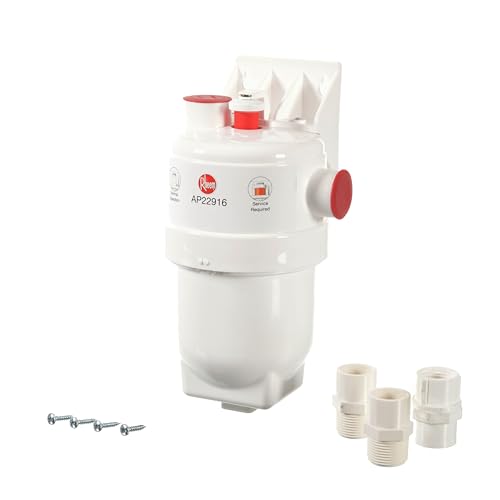
Rheem Axiom External Neutralizer RTG20329AR
$149.85Condensate from any condensing unit runs mildly acidic and needs neutralizing before it reaches a copper or cast iron drain.
Best for: A Rheem condensing tankless that must pass inspection
Check price on Amazon
Xiny Tool 3/4 in IPS Service Valve Kit
$49.99Isolation valves at the unit are what make an annual descale possible without disturbing the gas and water connections.
Best for: A straightforward 3/4 inch tankless
Check price on AmazonFrequently asked questions
- What BTU input does the Rinnai RX160iN have?
- The Amazon listing for this model does not publish a BTU input figure. Rather than estimate one from the model number, we recommend pulling the actual installation manual or specification sheet directly from Rinnai before sizing a gas line or comparing it against a competing unit that does state its input.
- What is the cold water sandwich, and does the RX160iN fix it?
- The cold water sandwich is the burst of cold water a tankless heater sends through the line when a tap is turned off and back on quickly, before the heat exchanger has caught back up. Rinnai's Smart Sense electronics on the RX160iN are designed to reduce this effect, though the listing does not quantify it with a specific number.
- What is the difference between the Rinnai RX160iN and RX130iN?
- Both are condensing indoor units in Rinnai's RX Smart Sense line, with the RX160iN being the larger of the two. Neither this listing nor the RX130iN's publishes a BTU input figure in the fields available here, so the practical difference in capacity should be confirmed against Rinnai's own specification sheets.
- Does the Rinnai RX160iN need a condensate neutralizer?
- Yes. It is a condensing unit, and condensing tankless heaters all produce mildly acidic condensate that most local plumbing codes require neutralizing before it reaches a copper or cast iron drain, regardless of brand. Budget for a neutralizer cartridge alongside the unit itself, since it is a required part of the installation rather than an optional upgrade, and plan on refilling its media on the same schedule as the annual descale.
- Is the Rinnai RX160iN better than a unit with a stated BTU rating?
- Not necessarily better or worse, just harder to size confidently from the Amazon listing alone. A unit like the Rheem RTGH-84 publishes its BTU input directly, which makes flow-versus-rise planning more transparent without pulling a separate manufacturer document first.
- Can I descale a Rinnai RX160iN myself?
- With isolation valves installed at the unit, flushing a tankless heater with a descaling solution through the service ports is a task many owners do themselves. The gas and electrical connections to the unit are not part of that process and do not need to be touched for a routine descale.
Safety note: do not size a gas line for this unit from a guess. Pull Rinnai's actual specification sheet for the BTU input before a licensed gas fitter runs the line.