Electric Tank Reviews
Rheem PROE50 Electric Water Heater Review
Researched from the DOE test procedures, NFPA 54 and NEC code tables, and manufacturer specifications. Updated .
Quick answer
The Rheem PROE50 is about as close to the median American water heater as this catalog gets: 50 gallons, electric resistance, 240 volts. This is also the tank most likely to be bought at a home center with installation bundled in, and for someone who just wants working hot water again today, that is frequently the right call. What follows covers what the listing actually publishes, what a reader can honestly compute from it, and where an online order genuinely adds value on top of the tank itself.
We did not test, install or measure this unit ourselves. This review is compiled from the manufacturer listing, the standard heat-input relation used to compute recovery rate from a resistance element's wattage, and the consensus of verified owner reviews.
What the specifications actually say
The listing publishes 50 gallons of capacity, electric resistance heat, 240 volts, and states an 18.75 amp draw in the title itself. That amperage is a published figure, not a guess, and it lets us do one honest piece of arithmetic: at 240 volts, 18.75 amps works out to 4,500 watts by the standard relation P = V x I. From there, the standard recovery formula for an electric resistance element, GPH = kW x 3412 / (8.33 x rise), gives roughly 20.5 gallons per hour at a 90 F rise, which is a common planning assumption rather than a measured test condition. Adding one hour of that recovery to a conventional 70 percent usable fraction of the tank gives an estimated first hour rating near 55 gallons.
| Specification | Value | Basis |
|---|---|---|
| Tank capacity | 50 gallons | Published |
| Voltage | 240 volts | Published |
| Listed current draw | 18.75 amps | Published in the listing title |
| Element wattage | About 4,500 watts | Computed, P = V x I |
| Estimated recovery rate | About 20.5 gallons per hour at a 90 F rise | Computed, planning rise is a convention |
| Estimated first hour rating | About 55 gallons | Computed, 70 percent usable capacity is a convention |
| Measured UEF and FHR (DOE label) | Not published in this listing | Not published |
| Warranty term | Not published in this listing | Not published |
Convention Source: Amperage and voltage are published in the manufacturer listing. The recovery formula is the standard heat-input relation for an electric resistance element; the 90 F rise and 70 percent usable capacity are planning conventions rather than the DOE test condition.. The EnergyGuide label on the physical tank carries the measured UEF and first hour rating, which govern over this estimate. Recompute recovery at your own inlet and setpoint with the recovery rate calculator.
Who it suits
This suits a household replacing an existing 50 gallon electric tank on a like-for-like basis, since it is the size the existing space, wiring and drain pan were almost certainly built around. It suits a two to four person household on a 90 F rise, where the computed 20.5 gallon per hour recovery and roughly 55 gallon first hour rating cover a normal morning without a heat pump's installation requirements. It suits a buyer who wants a professional line tank with a brass drain valve and an anode rod already specified on the listing, rather than researching those as separate decisions.
Who should not buy it
Skip this if the real priority is the lowest possible operating cost over the tank's life: a heat pump water heater of the same capacity runs at two to four times the efficiency, at a higher purchase price and with its own installation requirements. Skip it if the household regularly runs multiple showers back to back and finds itself running out, since going up a tank size or to a tankless unit addresses that more directly than staying at 50 gallons. Skip it, honestly, if a home center visit with installation bundled in is genuinely available and preferred: this is the single most common tank in the country specifically because that route works for most people, and pretending otherwise here would be dishonest.
What the installation actually involves
A straight electric tank swap is usually the simplest job on this site: water lines, a T&P discharge, and a 240 volt circuit sized to the element's amperage, which the breaker size calculator handles from the published amperage. Before any element work, turn the breaker off and verify it is off with a meter, and never energize an element that is not fully submerged, since a dry-fired element burns out in seconds. If the household's water is softened, note that softened water is more aggressive on a magnesium anode rod and shortens its life; the softening decision itself belongs to homewatercalc.com, while the anode's wear rate under that water is squarely this site's territory.
How we researched this
We did not test, install or measure this water heater ourselves. The published amperage and voltage come directly from the manufacturer listing. The wattage, recovery rate and first hour rating are computed from those published figures using the standard electric recovery formula, with the rise and usable-capacity assumptions labeled plainly as planning conventions rather than measured values. Everything else, including the measured UEF and the actual first hour rating, is not published in this listing and is not estimated here.
The accessory layer this tank actually needs
The tank itself is the big-box purchase. The parts around it, the ones that fail years apart and are cheap to keep on a shelf, are where an online order earns its place.

Eastman 2 Gallon Thermal Expansion Tank
$34.98A small expansion tank for a closed system, correctly sized against a 50 gallon capacity rather than guessed.
Best for: The standard 40 or 50 gallon tank on a closed system
Check price on Amazon
Ozek 44 in Segmented Magnesium Anode
$39.45A magnesium anode rod, the sacrificial part that determines whether the tank or the rod corrodes first.
Best for: The tightest installations
Check price on Amazon
Camco 4500W 240V Foldback Element
$12.85A spare heating element on the shelf before the original one fails, rather than a same-day trip when it does.
Best for: Hard water, where elements scale and burn out
Check price on Amazon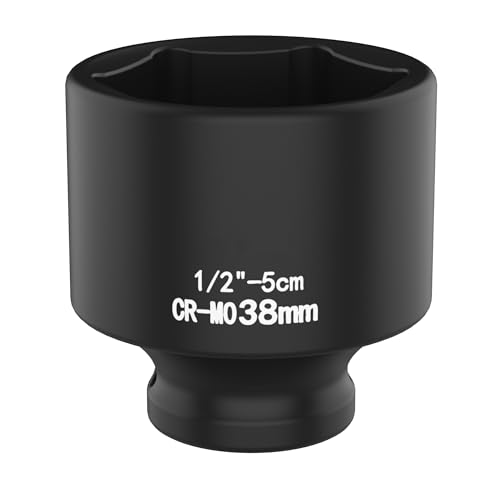
Timsec 1-1/2 in Element Socket, 1/2 in Drive
$13.99The specific deep socket an element wrench needs, since a standard socket set does not reach one.
Best for: Any residential element replacement
Check price on AmazonFrequently asked questions
- How many amps does the Rheem PROE50 draw?
- The manufacturer listing states 18.75 amps at 240 volts. Multiplying those figures by the standard relation P = V x I works out to about 4,500 watts, which is the typical single-element wattage for a residential 50 gallon electric tank. Use the 18.75 amp figure, not an assumed wattage, when sizing the breaker for this specific unit.
- What is the estimated first hour rating of the Rheem PROE50?
- Using the published amperage to derive roughly 4,500 watts, the standard recovery formula gives about 20.5 gallons per hour at a common 90 F planning rise. Adding that to a conventional 70 percent usable fraction of the 50 gallon tank puts the estimated first hour rating near 55 gallons. The measured figure that actually governs is on the EnergyGuide label on the physical unit.
- Is 50 gallons the right size for most households?
- It is the most common residential electric tank size in the country, which suggests it fits a typical two to four person household reasonably well, but capacity should still be checked against actual usage rather than assumed from popularity. The water heater size calculator walks through household size, fixture count and peak usage to confirm whether 50 gallons fits a specific home.
- Does the Rheem PROE50 need an expansion tank?
- If the home has a closed plumbing system, meaning a check valve, backflow preventer or pressure-reducing valve on the supply line, then yes, this tank needs a correctly sized thermal expansion tank just like any storage water heater on a closed system. Skipping one on a closed system is not a safe option regardless of tank brand or size.
- Would a heat pump water heater be cheaper to run than the Rheem PROE50?
- Generally yes, since heat pump water heaters run at two to four times the efficiency of a plain resistance element for the same capacity, which lowers the electric bill over the tank’s life. The tradeoff is a higher purchase price and installation requirements, including surrounding air volume and a condensate drain, that a plain resistance tank does not need.
- Is it better to buy this tank at a home center with installation included?
- For many households, yes. A plain 50 gallon electric replacement is frequently bought that way, and when the goal is simply working hot water again as quickly as possible, that route is often the right call. Where an online order earns its place is the accessory layer around the tank: the expansion tank, the anode rod, a spare element and the tools to service it.
Safety note. Turn the breaker off and verify it is off before touching an element, and never energize an element that is not fully submerged. The T&P valve on this tank must never be capped, plugged or removed; a dripping valve needs a replacement valve or a correctly sized expansion tank instead.