Troubleshooting
Rotten Egg Smell in Hot Water
Researched from the DOE test procedures, NFPA 54 and NEC code tables, and manufacturer specifications. Updated .
Quick answer
A hydrogen sulfide smell is unmistakable once it shows up, and where it shows up tells you almost everything about the cause. A smell confined to hot water is a water heater problem with a well understood chemical mechanism and a straightforward fix. A smell present at both hot and cold taps is a water supply problem that a new anode rod cannot touch, no matter how good a fix it is for the hot-only case.
Confirming which pattern applies takes one simple check before spending anything on a repair.
What actually causes the rotten egg smell in hot water?
The smell is hydrogen sulfide gas, produced when naturally occurring sulfate-reducing bacteria in the water react with the hydrogen given off as a magnesium anode rod sacrificially corrodes inside the tank. Magnesium is the most reactive metal commonly used for anode rods, which is exactly why manufacturers favor it for tank protection and exactly why it is also the most common cause of this specific odor. The reaction happens inside the tank itself, which is why the smell tends to appear only at hot taps.
Hot-only versus both taps: what does each pattern mean?
Run cold water from an outdoor spigot ahead of any softener or filter to test the raw incoming supply directly before drawing a conclusion.
| Where the smell shows up | Likely cause | Whose problem is it? |
|---|---|---|
| Only at hot taps, cold water smells fine | The magnesium anode rod reacting inside the water heater tank | The water heater; an anode rod swap usually resolves it |
| At both hot and cold taps | Sulfate-reducing bacteria or dissolved sulfur present in the incoming water supply itself | The water supply, not the water heater |
| Only after the tank has sat unused for a while, then fades | The same anode reaction, concentrated in water that has been sitting stagnant | The water heater; still an anode-related cause |
Convention Source: Common diagnostic distinction used in water treatment and plumbing guidance for isolating hydrogen sulfide odor to the anode reaction inside a water heater versus the incoming water supply itself.. Some water softeners or filters can mask or reduce a supply-side smell, so test cold water ahead of any treatment equipment already in the line for an accurate reading.
Why does a magnesium anode rod cause this, and not always the tank?
An anode rod is designed to corrode preferentially, sacrificing itself so the tank's steel does not, and magnesium is chosen for many tanks because it is a highly reactive metal that protects effectively. That same reactivity releases hydrogen ions readily as the rod corrodes, and in water chemistry that includes sulfate-reducing bacteria, that hydrogen becomes the fuel those bacteria use to produce hydrogen sulfide right inside the tank. Two tanks with the same magnesium rod, in different water chemistry, can produce very different results, from no smell at all to a strong one.
What actually fixes a hot-only rotten egg smell?
There are two real fixes, and both work by removing the magnesium reaction rather than by treating the smell after the fact. Replacing the magnesium rod with an aluminum-zinc alloy rod is the lower-cost option: it is a far less reactive metal, produces less hydrogen, and commonly resolves the smell while still protecting the tank sacrificially. Installing a powered anode instead protects the tank electrically rather than sacrificially, so nothing is corroding to produce hydrogen in the first place, eliminating the reaction entirely rather than just reducing it. The guide on replacing an anode rod covers the swap itself, and the compare pages on magnesium versus aluminum anode rods and powered versus sacrificial anode rods go deeper on choosing between the two.
When is a powered anode worth the extra cost over an aluminum-zinc rod?
An aluminum-zinc rod is cheaper up front and commonly resolves the smell, but like any sacrificial rod it wears out over years and eventually needs checking and replacing again. A powered anode costs more initially, but it never sacrifices any metal, so it produces no hydrogen sulfide reaction at all and needs no periodic rod replacement, only an occasional check that the power module itself is functioning. A household on well water, or one that has already gone through more than one magnesium or aluminum rod fighting the same recurring smell, is where the powered anode's higher upfront cost tends to pay for itself in avoided repeat visits.
What happens once the anode rod is fully consumed?
A sacrificial anode rod is designed to corrode away completely over its service life, and the anode rod life calculator estimates roughly how long that takes for a specific tank and water condition. Once a magnesium rod is fully consumed, the reaction that produces the smell can actually lessen, since there is less reactive metal left to generate hydrogen, but that is not good news: with the rod gone, the tank's own steel is what starts corroding unprotected, which shortens the tank's remaining service life. A fading smell on an old rod is not a sign the problem solved itself; it is closer to a sign the rod needs checking and likely replacing before the tank starts taking the damage the rod was there to prevent.
What if the smell shows up at both hot and cold taps?
Then the anode rod is not the cause, since the reaction that produces this smell happens inside the water heater tank, not in the cold supply line. A smell present at both hot and cold points to sulfate-reducing bacteria or dissolved sulfur in the incoming water itself, which is particularly common on private well water. Testing and treating the water supply is outside what a water heater page can responsibly cover; the water quality testing guidance at HomeWaterCalc is the place to start for that side of the problem, and no anode rod swap on the water heater will resolve a smell that originates in the supply itself.
Do not confuse a rotten egg smell in the water with an actual gas odor near a gas appliance. Hydrogen sulfide from a water heater's anode reaction is a water chemistry issue, not a fuel gas leak. If there is ever a suspected gas smell near the appliance itself, rather than in the water, leave the area and contact the gas utility immediately; that is a different, always professional-only emergency.
Fixing the hot-only smell
Either route below removes the magnesium reaction causing the odor; a powered anode removes it permanently, an aluminum-zinc rod removes it at a lower upfront cost.

Ozek 44 in Segmented Aluminum Zinc Anode
$36.45An aluminum-zinc alloy replacement anode rod, a far less reactive metal than magnesium and the standard fix for this specific smell.
Best for: A tank with a sulphur smell
Check price on Amazon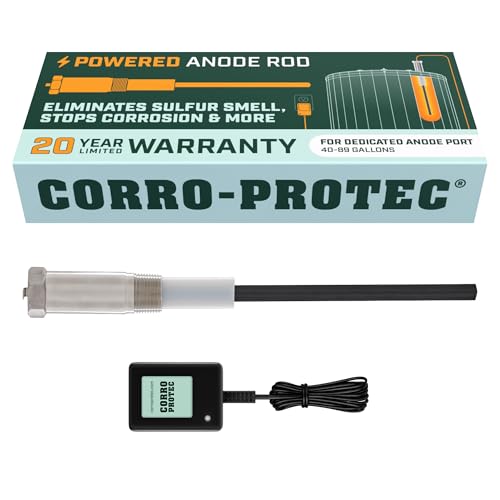
Corro-Protec Powered Anode Rod
$179.95A powered anode that protects the tank electrically rather than sacrificially, producing no hydrogen and needing no periodic rod replacement.
Best for: Hard water, or a tank you intend to keep
Check price on Amazon
Element Socket Set, 27 mm and 38 mm
$15.99A socket sized for removing the original anode rod, which is often torqued down tightly at the factory.
Best for: Not knowing which size the tank takes
Check price on AmazonFrequently asked questions
- Why does my hot water smell like rotten eggs but my cold water does not?
- A smell confined to hot water almost always comes from the magnesium anode rod inside the water heater reacting with sulfate-reducing bacteria naturally present in the water, producing hydrogen sulfide gas. Because that reaction happens inside the tank itself, cold water bypassing the tank is unaffected, which is exactly why the smell shows up only at hot taps.
- What is actually causing the rotten egg smell in my water heater?
- A magnesium anode rod is designed to corrode sacrificially to protect the tank's steel, and that reaction releases hydrogen. In water containing sulfate-reducing bacteria, that hydrogen fuels the production of hydrogen sulfide gas, the compound responsible for the rotten egg odor, right inside the tank where the rod is corroding.
- Does replacing the anode rod get rid of the rotten egg smell?
- Yes, in most hot-only cases. Replacing the magnesium rod with a less reactive aluminum-zinc alloy rod reduces the hydrogen available for the reaction and commonly resolves the smell. A powered anode goes further, eliminating the reaction entirely since it protects the tank without any metal corroding to produce hydrogen in the first place.
- What is the difference between an aluminum-zinc anode rod and a powered anode rod for smell?
- An aluminum-zinc rod is a less reactive sacrificial metal than magnesium, producing less hydrogen and commonly stopping the smell, but it still wears out over years like any sacrificial rod. A powered anode protects the tank electrically instead of sacrificially, so nothing corrodes and no hydrogen is produced at all, at a higher upfront cost but with no periodic rod replacement needed.
- Why does hot water sometimes smell worse after the water heater sits unused for a while?
- Stagnant water inside the tank gives the anode reaction more time to build up hydrogen sulfide before anything draws it out, so the first draw after the tank has sat unused, such as after being away, often smells stronger than water drawn during regular daily use. It is still the same underlying anode reaction, just concentrated by the standing time.
- What does it mean if both my hot and cold water smell like rotten eggs?
- A smell present at both hot and cold taps is not an anode rod problem, since that reaction only affects water that has passed through the water heater tank. It points to sulfate-reducing bacteria or dissolved sulfur in the incoming water supply itself, particularly common with well water, and that is a water quality issue to test and treat at the supply, not the water heater.
Test hot against cold before buying a rod. A smell only in hot water is the water heater's anode reaction, fixed with a different rod or a powered anode. A smell in both is the water supply, and no part on the water heater will resolve that half of the problem.