Gas Storage Tank
Best Gas Water Heaters
Researched from the DOE test procedures, NFPA 54 and NEC code tables, and manufacturer specifications. Updated .
Quick answer
A gas storage tank's installation is decided mostly by how it vents, not by its brand or its recovery rate. An atmospheric tank relies on buoyancy alone to push exhaust up an existing masonry or B-vent flue, which is the cheapest and simplest install and also the one most exposed to backdrafting if the flue is undersized, blocked, or fighting a tight, well sealed house for makeup air. A power vent tank uses a blower to push exhaust out through PVC, which frees the installation from needing a usable chimney at all but adds an electrical connection and a condensate consideration to the job.
This catalog carries exactly three gas storage tanks, which is a genuinely thin online selection next to gas tankless or electric tank categories. Rather than pad that list, this page ranks the three honestly by venting style and builds the rest of the page around the accessories a gas tank installation actually needs.
Why does venting decide a gas water heater installation more than the tank does?
An atmospheric tank has no fan; it depends entirely on the natural buoyancy of hot exhaust gas to rise up a flue on its own. That works well with a properly sized, unobstructed chimney and enough makeup air in the house, and it fails, sometimes invisibly, when either condition is missing, a failure mode called backdrafting where combustion gas spills into the living space instead of venting outside. A power vent tank sidesteps that risk with a blower and PVC venting, at the cost of needing power at the tank and, on some models, a condensate drain. See atmospheric vs power vent for the full comparison, and size any gas line change with the gas line size calculator.
| Model | Fuel | BTU input | Vent style | Tier |
|---|---|---|---|---|
| GE RealMAX Choice 40 Gallon | Natural gas | Not published in this listing | Atmospheric | Beginner |
| Rheem PROG50-36P | Propane | 36,000 | Atmospheric | Intermediate |
| A.O. Smith GPVX-50L ProMax SL | Natural gas | Not published in this listing | Power vent | Expert |
Published standard Source: Manufacturer listing specifications in the product catalog. Where BTU input is not stated in the listing, it is left blank here rather than estimated.. The gas line size a tank needs follows from its BTU input through NFPA 54 / IFGC capacity tables, not from the storage capacity alone. Confirm the nameplate BTU rating before sizing any gas line work.
What does a gas tank installation actually need beyond the tank?
The accessory layer is where this category's online selection is genuinely strong, even with only three tanks to choose from.
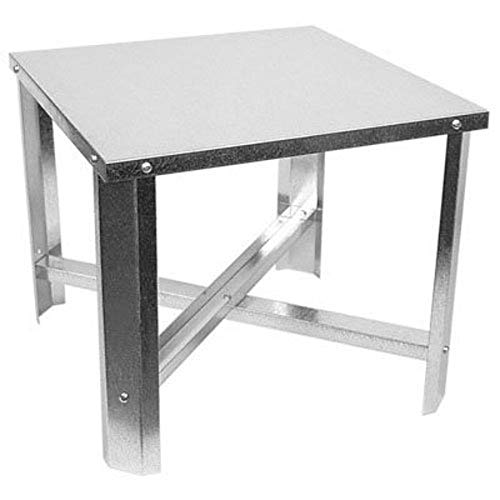
Camco 11231 Gas Water Heater Stand
$61.99Raises the tank about 18 inches off a garage floor. Many local codes and manufacturer instructions still call for this clearance on a gas ignition source in a garage, though modern FVIR-rated tanks may not require it in every jurisdiction; check local code and the installation manual either way.
Best for: Any gas heater in a garage
Check price on Amazon
Oatey 34084 26 in Aluminum Pan
$32.95An aluminum drain pan rather than plastic, which matters under a gas tank that sits near a draft hood and, on some models, a pilot.
Best for: A gas tank, or any pan that might see heat
Check price on Amazon
Cash Acme NCLX-5LX 150 psi T&P Valve
$23.85Rated at 150 psi, the standard residential tank working pressure, but the replacement valve must match whatever rating is stamped on the specific tank's data plate, never a general assumption.
Best for: A 150 psi rated residential tank
Check price on AmazonHow we chose these gas water heaters
We did not install or test any of these tanks ourselves. This catalog currently carries only three gas storage tanks, which is stated here honestly rather than stretched into a longer list. The picks and their tier placement come from manufacturer published fuel type, BTU input where stated, and vent style, cross-checked against the pattern of verified owner reviews. Most buyers replacing a gas tank still go through a local plumbing supply house or a licensed installer, and the accessories above are useful with or without ordering the tank itself here.
Buying tips for a gas water heater
Match a replacement T&P valve's pressure rating to the number stamped on the tank's own data plate, never to a general assumption, even though 150 psi is the common residential figure. Confirm the flue or vent path can handle the new tank's BTU input before committing to an atmospheric model, and check the recovery rate that BTU figure implies with the recovery rate calculator and the recovery rate chart.
Gas line work and flue or vent work belong to a licensed plumber or gas fitter. Carbon monoxide from improper venting is a real risk, and backdrafting on an atmospheric vent is invisible without a detector. A T&P valve should never be capped, plugged, or removed; if it drips, replace the valve or add an expansion tank.
The picks, by tier
With only three products in this category, tier here tracks installation complexity and venting rather than a wide feature spread. Beginner is the simplest atmospheric swap. Intermediate is the propane equivalent at a common residential size. Expert is the power vent unit that frees the installation from a usable chimney but adds electrical and condensate requirements.

GE RealMAX Choice 40 Gallon Natural Gas
$1,051.49An atmospheric 40 gallon natural gas tank that vents through an existing flue, the simplest and cheapest gas tank installation to plan for.
Best for: A like-for-like swap into an existing masonry or B-vent flue
Check price on Amazon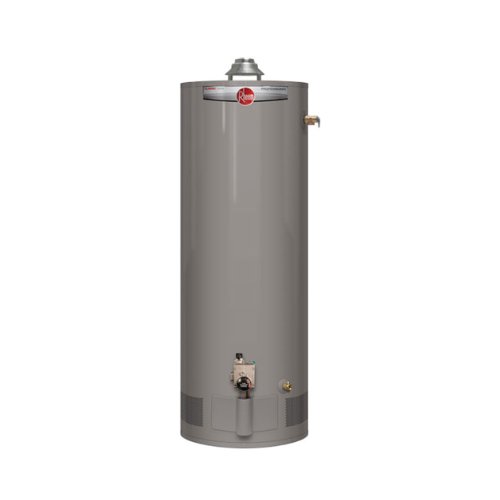
Rheem PROG50-36P 50 Gallon Propane
$1,207.00An atmospheric propane tank at 36,000 BTU input, the figure that sets its recovery rate and the usual number on a residential 50 gallon unit.
Best for: Propane properties replacing an atmospheric tank
Check price on Amazon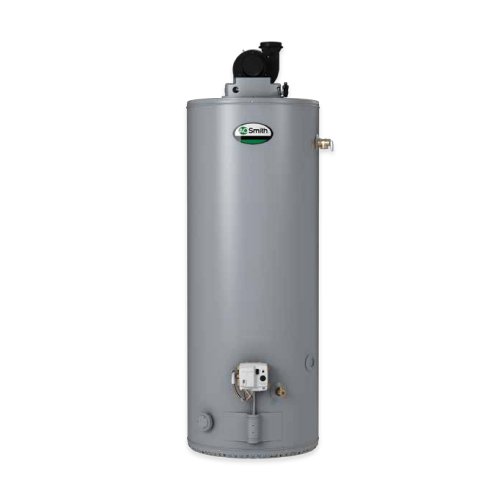
A.O. Smith GPVX-50L ProMax SL Power Vent
$2,199.00A power vent unit that pushes exhaust through PVC with a blower, which removes the need for a chimney entirely and adds an electrical outlet and a condensate path to the installation.
Best for: Basements with no usable flue
Check price on AmazonFrequently asked questions
- What is the difference between an atmospheric and a power vent gas water heater?
- An atmospheric tank relies on the natural buoyancy of hot exhaust to rise through an existing chimney or B-vent flue with no fan. A power vent tank uses an electric blower to push exhaust out through PVC pipe, which removes the need for a usable chimney but adds an electrical connection to the installation. Atmospheric venting is cheaper but more exposed to backdrafting if the flue or house makeup air is inadequate.
- Does the GE RealMAX Choice publish its BTU input?
- No, the listing specifications available for this natural gas tank do not state a BTU input figure. Rather than estimate one, that field is left blank on this page; the manufacturer's data plate or full spec sheet is the correct place to find the actual number before sizing a gas line or estimating recovery rate.
- How many BTUs does the Rheem PROG50-36P propane tank use?
- 36,000 BTU input, stated in the listing specifications. That figure is what sets the tank's recovery rate, the gallons per hour it can reheat, and it is also the number a gas line size calculation should use rather than the 50 gallon storage capacity, which describes volume, not burner output.
- Why is the online selection of gas storage tanks so thin compared to electric?
- Gas tanks involve venting, combustion safety, and often local code review in a way electric tanks do not, which pushes more buyers toward a local plumbing supply house or a licensed installer instead of an online order. This catalog reflects that reality honestly with three tanks rather than padding the list, while carrying a deeper selection of the accessories a gas tank installation actually needs.
- How far off the floor does a gas water heater need to sit in a garage?
- Many jurisdictions and manufacturer instructions have historically required raising a gas ignition source about 18 inches off a garage floor to keep it clear of heavier-than-air fuel vapors, though modern FVIR-rated tanks may not require this in every local code. Check the specific jurisdiction's current requirement and the tank's own installation manual rather than assuming either way.
- What T&P valve rating does a residential gas tank like the Rheem PROG50-36P need?
- Match whatever pressure rating is stamped on the tank's own data plate. Most residential storage tanks, including common 50 gallon units, are rated for a 150 psi T&P valve, which is the figure a replacement valve like the Cash Acme NCLX-5LX is built for, but the data plate on the specific tank is always the number to confirm rather than an assumption.
Leave gas line and venting work to a licensed plumber or gas fitter, and never cap, plug, or remove a T&P valve. Backdrafting on an atmospheric vent is invisible without a carbon monoxide detector, and a dripping relief valve calls for a replacement valve or an expansion tank, not a cap.