Pressure & Expansion
Expansion Tank vs Pressure Reducing Valve
Researched from the DOE test procedures, NFPA 54 and NEC code tables, and manufacturer specifications. Updated .
Quick answer
The relief valve on a water heater weeps for one of two very different reasons, and installing the wrong fix leaves the real problem in place. One cause is pressure that spikes only while the tank is actively heating. The other is pressure that runs too high all the time, heating or not. Telling them apart takes one cheap test, and the fix for each is a different part.
What makes a plumbing system 'closed', and why does it matter?
A plumbing system is closed when something prevents water from being pushed backward out of the house once it enters, such as a backflow preventer, a check valve at the water meter, or a pressure reducing valve, all of which allow flow in but not out. In an open system, water that expands as it heats simply pushes back toward the street main. In a closed system, that expanding water has nowhere to go but into the pipes and the tank itself, and pressure climbs until either the relief valve opens or something fails.
How do I tell thermal expansion from high static pressure?
| Symptom | Likely cause | Test |
|---|---|---|
| Drips only during or right after a heating cycle | Thermal expansion in a closed system | Check pressure with a gauge right after heating; a spike of 10 to 30-plus psi above resting pressure points to expansion |
| Drips even when the tank has been idle for hours | Static street pressure already near or above the valve's rated setting | Check pressure with a gauge on a cold tap when the heater has not run recently; many codes require a PRV once static pressure exceeds 80 psi |
| Drips constantly regardless of the heating cycle | A worn relief valve, or both pressure causes present at once | Replace the valve and re-test after addressing whichever pressure cause is present |
Published standard Source: Common plumbing code thresholds referencing 80 psi as the point where a pressure reducing valve is required, and ASME-rated relief valve set pressures printed on the valve itself.. A pressure gauge that threads onto an outdoor spigot or a washing machine valve gives a reliable static reading in a few minutes.
When is a pressure reducing valve the right fix?
If a gauge reading taken when the heater has been idle for a while shows static pressure already high, commonly above 80 psi, the water heater is not the source of the problem. The incoming street or well pressure itself is too high for the whole house, and every fixture, appliance and supply line is under that same load, not just the water heater. A whole-house pressure reducing valve installed on the main line brings that number down for the entire system, and a new relief valve alone will do nothing to lower it.
When is an expansion tank the right fix?
If static pressure reads normal when the tank is idle but spikes noticeably right after a heating cycle, the system is closed and the water heater has nowhere to send the volume it creates as it heats. An expansion tank, precharged to match the system's static pressure and plumbed onto the cold supply line near the heater, gives that expanding water a cushion of compressed air to push into. Sizing depends on tank capacity and temperature rise; the expansion tank size calculator works out the volume for a specific tank.
Why do some houses need both?
Installing a pressure reducing valve is itself an action that can close a previously open system, since a PRV only allows flow in one direction. A house that adds a PRV to solve a high static pressure problem can create a new thermal expansion problem it did not have before, which is exactly why many jurisdictions require an expansion tank alongside a newly installed PRV or backflow preventer. The two devices are not competing solutions to the same symptom; the PRV addresses what comes in, and the expansion tank addresses what happens after it is heated inside a now-closed system.
What does each choice cost you later?
A bladder-style expansion tank loses air charge gradually over years and needs its precharge checked against static pressure occasionally to keep working correctly; a tank that has lost its charge behaves as if it were never installed. A pressure reducing valve can drift out of calibration over a long service life, either creeping pressure back up or, less often, restricting flow more than intended, so a periodic pressure check at a hose bib is worth doing on whichever device is in the system.
A relief valve that drips constantly is doing its job, not malfunctioning by choice. It is releasing pressure that would otherwise have nowhere to go. Address the pressure cause, expansion or static, and if the valve itself does not reseat properly afterward, a straightforward replacement valve is the correct next step, since a relief valve is the last line of defense on a sealed tank of hot, pressurized water.
Expansion tank hardware, once you have confirmed that is the cause
Match the tank to the water heater's capacity and temperature rise using the calculator above before buying.

Eastman 2 Gallon Thermal Expansion Tank
$34.98A small-capacity tank sized for a standard residential tank water heater in a tight mechanical closet.
Best for: The standard 40 or 50 gallon tank on a closed system
Check price on Amazon
Amtrol ST-5 2 Gallon
$77.99A common mid-capacity expansion tank sized for typical residential tank capacities and pressure ranges.
Best for: Anyone who wants the name plumbers recognise
Check price on Amazon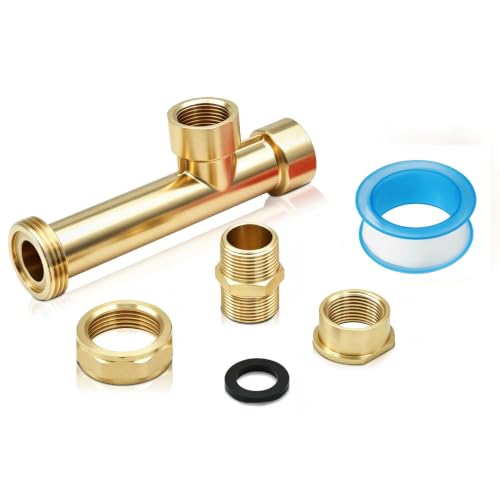
Brass Water Heater Expansion Tee, 3/4 in NPT
$31.59A mounting tee for attaching the expansion tank to the cold supply line near the water heater.
Best for: Adding an expansion tank to an existing install
Check price on AmazonFrequently asked questions
- What causes a water heater relief valve to drip only while the tank is heating?
- That pattern points to thermal expansion in a closed plumbing system. As stored water heats, it expands in volume, and with nowhere else to go in a system sealed by a check valve, backflow preventer or pressure reducing valve, the pressure rise pushes the relief valve open briefly during or right after each heating cycle. An expansion tank sized to the water heater's capacity gives that volume somewhere to go instead.
- What causes a relief valve to drip even when the water heater has been idle for hours?
- A valve that weeps with no recent heating cycle usually means the static pressure in the house is already close to or above the valve's rated relief setting, independent of the water heater entirely. Testing pressure at an outdoor spigot when the heater has not run confirms it. Many plumbing codes require a pressure reducing valve once static pressure exceeds about 80 psi.
- Does an expansion tank lower my household water pressure?
- No. An expansion tank does not regulate or reduce pressure; it absorbs the extra volume created by heating water in a closed system so that volume does not have to push the relief valve open. If the household's baseline pressure is too high to begin with, a pressure reducing valve is the device that actually lowers it, not an expansion tank.
- How do I know if my home's plumbing system is closed?
- Look for a check valve at the water meter, a backflow preventer where the service line enters the house, or an existing pressure reducing valve, any of which allow water to flow in but not back out toward the street. If one of those is present, the system is closed and heated water has nowhere to expand except into the plumbing itself.
- Do I need both an expansion tank and a pressure reducing valve?
- Often, yes. A PRV controls incoming static pressure, but installing one turns an open system into a closed one if it was not closed already, which then creates a thermal expansion problem the PRV cannot solve on its own. Many codes require an expansion tank alongside a newly installed PRV or backflow preventer for exactly that reason.
- How often does an expansion tank need maintenance?
- A bladder-style expansion tank should have its air precharge checked periodically against the system's static water pressure, since the bladder can lose charge gradually over years of service. A tank with a lost charge no longer absorbs expansion effectively, and the relief valve will start weeping again as if no tank were installed at all.
Test before you buy either part. A five-minute pressure gauge reading when the tank is idle tells you which problem you actually have, and buying the wrong device to match a guess wastes money without stopping the drip.