Accessories
Best Hot Water Recirculation Pumps
Researched from the DOE test procedures, NFPA 54 and NEC code tables, and manufacturer specifications. Updated .
Quick answer
A hot water recirculation pump moves hot water continuously or on demand through a loop, so water already at temperature is waiting at a distant fixture instead of the fixture running cold or lukewarm water down the drain while it waits for hot water to travel from the tank. On a large house or a fixture far from the water heater, this can meaningfully cut both wasted water and the wait itself.
What a recirculation pump does not do for free is eliminate the energy cost of moving that hot water. A loop that runs continuously loses heat along its entire length around the clock, which is why every pick below is evaluated as much on its timer and thermostat control as on its flow rate. Before naming picks, one brand fact in this category needs to be stated plainly, because it changes how a listing should be read.
Which of these pumps is actually a Grundfos?
This needs to be said directly: several recirculation pumps sold under other brand names in this category use Grundfos-manufactured pump internals or closely mirror Grundfos model numbering, but that does not make them a Grundfos product. Of the picks in this roundup, only the Grundfos Comfort 595916 is an actual Grundfos-branded unit sold and warrantied by Grundfos. A rebadged or similar pump from another brand may perform adequately, but it should never be described or sold as a Grundfos, and a listing that implies otherwise is worth reading carefully before buying on that assumption.
Only the Grundfos Comfort 595916 in this list is a genuine Grundfos. Similar model numbers or internals under other brand names are not the same product.
What is the real tradeoff with a recirculation pump?
The benefit is immediate and easy to feel: instead of running a tap for a stretch waiting for hot water to travel from the tank, hot water is already present in the loop near the fixture. The cost is less visible because it happens continuously rather than at the moment of use. A loop full of hot water, whether it is actively circulating or simply sitting full between cycles, loses heat to the surrounding pipe, wall, and floor around the clock. On a pump that runs continuously with no control, that standing heat loss can add a meaningful amount to a water heating bill over a year, largely undoing the efficiency gains a household might have made elsewhere.
A timer that limits circulation to hours when hot water is actually likely to be needed, combined with an aquastat thermostat that stops the pump once loop temperature is already at setpoint, is what keeps the convenience from becoming a standing loss. Neither control is optional if efficiency matters, and a pump with both built in is worth the added cost over one with neither.
What is a retrofit crossover valve versus a dedicated return line?
A dedicated return line is a true recirculation loop: a second pipe runs from the far end of the hot water distribution back to the water heater or a nearby cold line, forming a continuous circuit a pump can push water around. This is the more efficient setup but requires that return pipe to exist, which is straightforward in new construction and much more invasive to add to an existing finished house.
A retrofit kit avoids that by installing a crossover valve under the sink at the fixture furthest from the water heater, which temporarily connects the hot and cold lines at that one point so the pump can push hot water out to that fixture and return it through the cold line instead of a dedicated pipe. It is a meaningfully easier installation with no new piping required, at the cost of slightly warming the cold line at that fixture during a cycle and generally being less efficient than a true dedicated loop.
How we chose
We did not install or run these pumps in our own plumbing. These picks are compiled from manufacturer published specifications, including flow rate, control features (timer, aquastat), and installation type (retrofit crossover versus dedicated loop), and the consensus of verified owner reviews for reliability and true brand identity where rebadging is common in this category.
Buying tips
Confirm whether your plumbing already has a dedicated return line before buying a dedicated-loop pump; if it does not, a retrofit crossover kit is the realistic option without a larger plumbing project. Prioritize a pump with both a timer and an aquastat thermostat over one with neither, since those controls are what determine whether the standing heat loss stays reasonable. Installation cost and labor for adding a dedicated return line is a project cost question that belongs to houseprojectcalc.com rather than this site.
The Expert-tier dedicated-loop pumps are built for a larger home or a longer run than a single distant bathroom, and are not worth the added cost or the plumbing work for a household that just wants to stop waiting at one far sink. Start with a retrofit kit if that is the actual problem being solved.
The picks, by tier
Use the recirculation pump calculator to estimate standby loss against wait-time savings for your specific plumbing run before choosing a pump.

PROZRTED Smart Recirculating Pump Kit
$129.99A basic retrofit crossover-valve kit at the lowest cost, suited to a single distant bathroom rather than a whole-house loop.
Best for: A budget retrofit with a thermostat
Check price on Amazon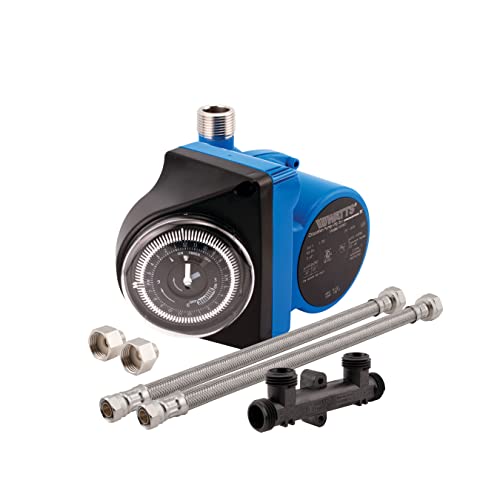
Watts Premier Recirculation System
$299.00A well-regarded retrofit pump with built in timer control, using a crossover valve under the furthest fixture instead of requiring a dedicated return line.
Best for: A tank heater with a predictable schedule
Check price on Amazon
Grundfos Comfort System 595916
$334.98The genuine Grundfos unit in this category, combining a timer and an aquastat thermostat so the pump only runs when it needs to, on either a retrofit or a dedicated-loop installation.
Best for: A retrofit with no dedicated return line
Check price on Amazon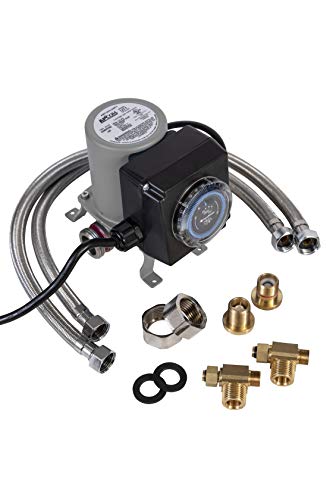
APCOM UT1 Under Sink Recirculation Pump
$374.99A dedicated-loop pump built for a true return line installation rather than a crossover retrofit, suited to new construction or a remodel where a return line can be run.
Best for: One fixture at the end of a long run
Check price on Amazon
Laing AutoCirc with Timer
$360.00A premium dedicated-loop pump with strong flow performance for a larger home or a longer plumbing run than a basic retrofit pump is designed to handle.
Best for: Anyone who wants the pump rather than a kit
Check price on AmazonFrequently asked questions
- Which of these recirculation pumps is actually made by Grundfos?
- Only the Grundfos Comfort 595916. Several pumps sold under other brand names in this category use similar internals or model numbering, but they are not Grundfos products and should not be described as such regardless of how a listing is worded.
- Does a recirculation pump waste energy?
- A recirculation loop loses heat continuously along its length, so a pump running without a timer or thermostat can add meaningfully to water heating costs. A pump with a built in timer, limiting circulation to hours hot water is actually needed, and an aquastat thermostat, stopping the pump once the loop is at temperature, keeps that standing loss in check.
- What is the difference between a retrofit and a dedicated recirculation setup?
- A dedicated setup uses a true return pipe running from the furthest fixture back toward the water heater, forming a complete loop, and is more efficient but requires that pipe to exist. A retrofit kit uses a crossover valve under a single distant fixture to connect hot and cold lines at that point instead, avoiding new piping at some cost to efficiency.
- Will a recirculation pump work with my tankless water heater?
- Many tankless units support recirculation, but check the manufacturer specifications first, since running a tankless heater in short recirculation bursts can behave differently than continuous fixture demand and some models require a specific recirculation-compatible configuration or built in port.
- How much water does a recirculation pump actually save?
- It depends on the length of the run between the water heater and the fixture and how many times a day that fixture is used. A long run to a distant bathroom used many times daily sees the largest water savings; a short run sees comparatively little, which is why sizing the decision to the actual layout matters more than assuming a pump helps everywhere equally.
A recirculation pump is only as efficient as its controls. Buy for the timer and thermostat first, the flow rate second, and be honest about whether a retrofit kit or a dedicated loop actually matches your plumbing.